Chimney damage on Long Island develops quietly, often invisible until water starts finding its way into your home. islipchimney.com has spent over two decades serving Sayville homeowners, and we've learned that the chimneys failing most often are those that went without attention for years. The salt air from Long Island Sound, freeze-thaw cycles during winter, and persistent moisture create a perfect storm for brick and mortar deterioration. Many homes in Sayville were built decades ago, meaning their original chimneys have weathered countless seasonal transitions. What starts as minor mortar joint crumbling becomes a pathway for water intrusion. Early intervention makes the difference between a straightforward repair and a crisis that demands emergency work.
Mortar joints are your chimney's first line of defense against the elements. These joints hold individual bricks together while sealing out rain, snow, and the humid air that blows in from surrounding water bodies. Over time, the mortar naturally erodes from weather exposure and constant temperature changes. Sayville residents often notice deteriorating mortar appearing as gaps, cracks, or missing material between bricks. When mortar fails, water seeps into the chimney structure itself. This moisture then freezes during cold snaps, expanding and creating additional cracks. The damage accelerates quickly once this cycle begins. Repointing the mortar joints—removing old material and installing fresh mortar—stops this destructive process and restores the chimney's protective seal.
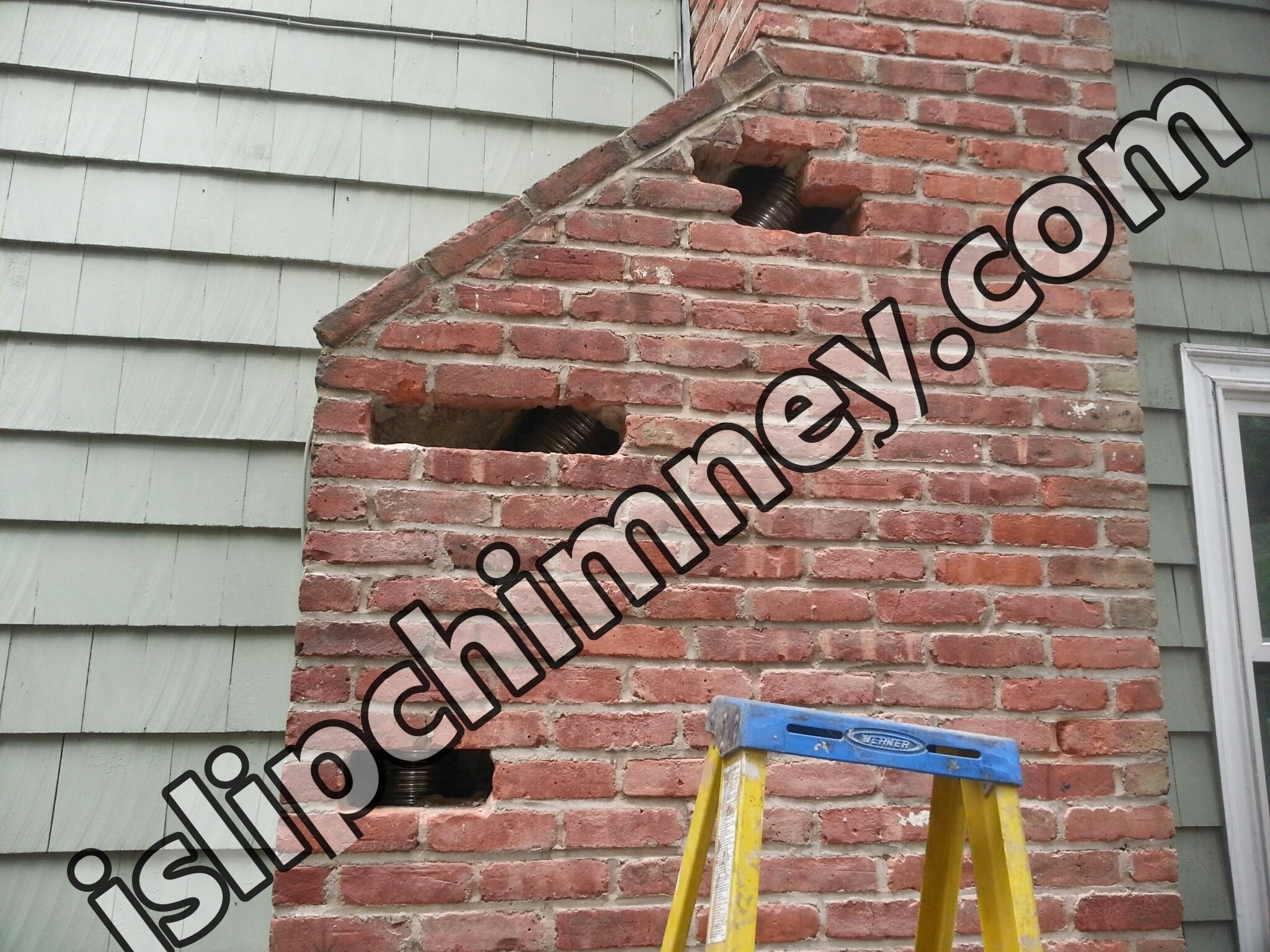
Brick damage takes many forms, and understanding what you're looking at helps explain why repair becomes necessary. Spalling occurs when the outer layer of a brick breaks away, leaving pits and rough patches on the chimney's surface. This happens when water gets trapped inside the brick, freezes, and forces pieces off. Sayville chimneys face this problem frequently because of our climate's wet winters and spring thaw cycles. Cracked bricks indicate stress from settlement, freeze damage, or structural shifting. Displaced bricks suggest the mortar holding them has failed completely. Any of these conditions allow water to penetrate deeper into the chimney structure. The brick itself becomes saturated, leading to more spalling, more cracking, and eventually structural instability if left unaddressed.
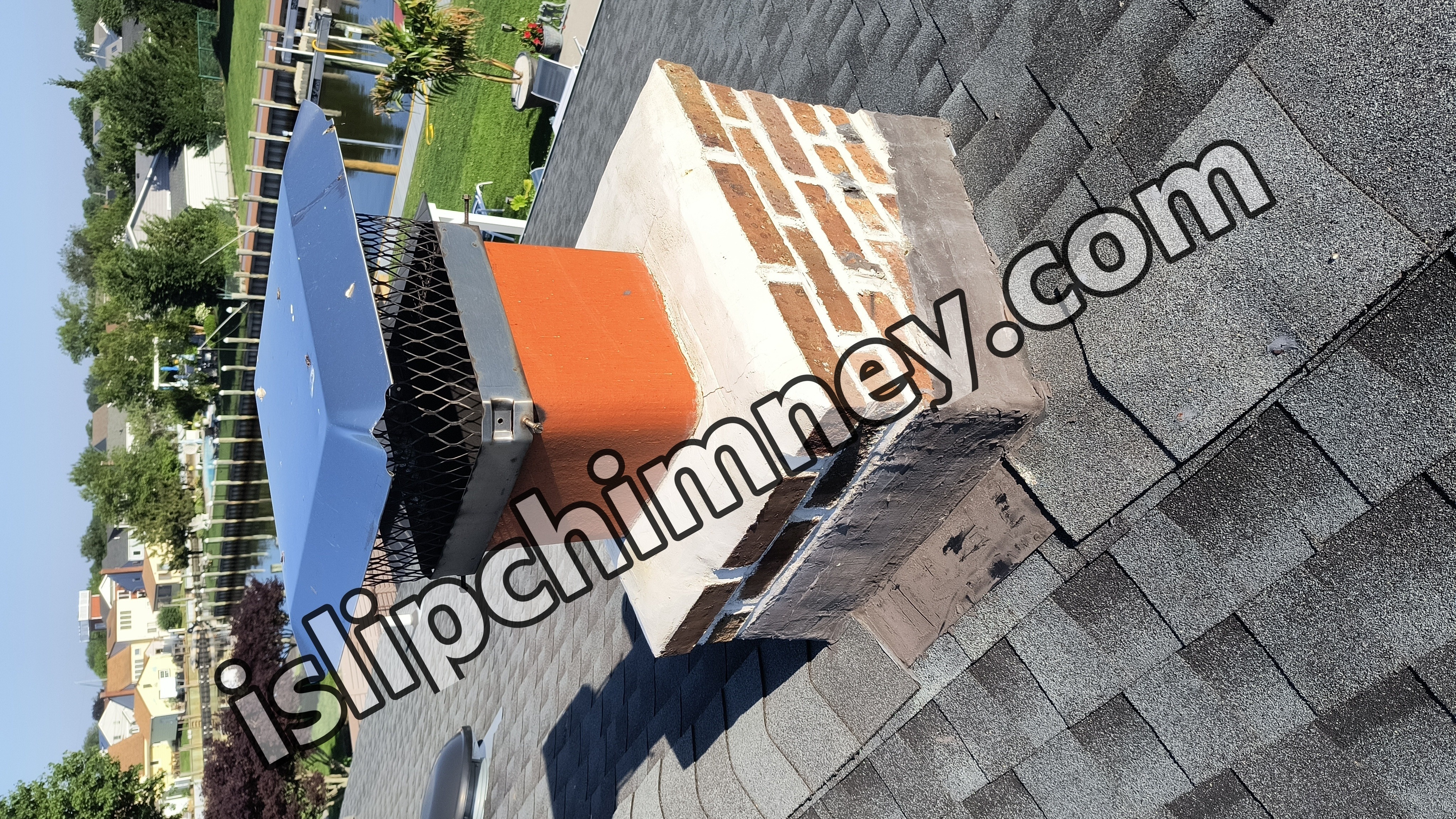
Water intrusion is perhaps the most damaging problem we see in Sayville homes. Water doesn't just enter your chimney at the top. It seeps through failed mortar joints, cracks in the brick, gaps around the flashing where the chimney meets the roof, and deteriorated chimney crowns. Once water gets inside, it migrates into the firebox, damaging the interior lining. It can saturate the wood framing around the chimney chase. It stains interior walls and ceilings, fosters mold growth, and creates musty odors in your home. Many homeowners in Sayville discover water damage only after a heavy rainstorm or during spring thaw. By that point, the water has already begun its work. The interior damage is often more expensive to repair than addressing the exterior problem that caused it. This is why catching water intrusion early matters so much.
Structural integrity of your chimney depends on all these components working together. The chimney must stand plumb and secure, transferring the weight of brick and mortar straight down to the foundation. Settlement cracks, missing mortar joints, and damaged bricks compromise this structural stability. A leaning chimney signals serious problems. Bricks pushing outward indicate the mortar has failed and can no longer hold them in alignment. Cracks running vertically up the chimney suggest ongoing stress and movement. Homes in Sayville with aging chimneys sometimes show these signs, especially if the original foundation was built on soil that shifts seasonally. Addressing structural issues requires careful assessment and systematic repair. Ignoring these warning signs risks catastrophic failure, where the chimney becomes unsafe and requires complete rebuilding.
Seasonal weather patterns on Long Island make chimney maintenance especially important year-round. Winter brings freeze-thaw cycles that exploit any existing cracks and gaps. Spring thaw combined with heavy rain pushes water through failed mortar joints. Summer humidity keeps masonry damp, slowing evaporation and promoting deterioration. Fall brings wind-driven rain that forces water sideways into chimney defects. Homes in Sayville heated by oil systems run their fireplaces and wood stoves during cooler months, creating temperature fluctuations inside the chimney. These temperature changes stress the mortar and brick. The proximity to coastal water means salt-laden air accelerates corrosion of chimney materials. Sayville homeowners can't simply wait for warmer months to address problems. Each season brings different challenges, and year-round vigilance catches problems before they become severe.
The age of housing stock in Sayville means many chimneys have never been professionally evaluated. Homes built in the 1960s, 1970s, and 1980s have chimneys that have endured decades of weather exposure. If the original builders used substandard mortar, problems develop faster. If repointing was done incorrectly years ago, new cracks appear around the repair work. Sayville residents inheriting older homes often don't know their chimney's condition until something fails. A thorough inspection reveals what the naked eye might miss. We examine mortar joints for deterioration, scan the brick for spalling and cracks, check the crown for damage, and assess flashing integrity. This evaluation provides a clear picture of what needs repair now and what might need attention in coming years.
Choosing to address chimney repairs promptly protects your home, your family, and your investment. Water damage spreads silently, compromising structural elements you can't see. Deteriorating mortar joints allow more damage with each passing season. Cracked and spalling bricks expose interior material to moisture. Sayville homes deserve protection from these preventable problems. islipchimney.com brings over 2001 of experience serving Long Island homeowners. We understand our region's climate, our area's typical housing stock, and the specific challenges facing older chimneys. When you notice deteriorating mortar, cracked bricks, water stains, or any other chimney concern, contact us at 631-316-0622. We'll evaluate your situation honestly and help you understand your options. Don't let a manageable repair become a major problem. Call islipchimney.com today at 631-316-0622 and schedule your chimney inspection.